
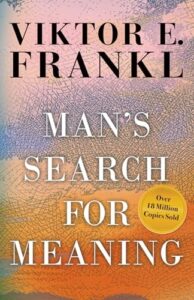
Man’s Search for Meaning
A psychiatrist's account of the camps, and the argument he drew from them that meaning survives when nothing else does.
Frankl survived Auschwitz and three other camps, and wrote this in nine days afterwards. The first half recounts what he saw; the second sets out logotherapy, his argument that the drive to find meaning runs deeper than the drive for pleasure or power, and that meaning stays available even when everything else has been taken. It is short, and the two halves depend on each other.
Recommended by 2 People

Jamie-Lynn Sigler
This is one of those rare books that doesn't just change how you think; it changes what you believe you can endure. It strips life down to the (in my opinion) most essential life question: not "Why is this happening to me" but "What is being asked of me now?"
Source · May 2026

Maria Popova
In 1945, shortly after his release from the concentration camps where his mother and brother had been murdered in the gas chambers, not yet knowing the love of his life was ailing with the typhus that would soon kill her, Viktor Frankl (March 26, 1905–September 2, 1997) sat down at his desk to compose what would become the epochal classic Man’s Search for Meaning.
Article · May 2026
As an Amazon Associate, bookstoread.org earns from qualifying purchases. Links to Amazon on this page may earn us a commission at no extra cost to you. Spotted an error on this page? Tell us and we will fix it.