
Reading List
Louise Foxcroft
Historian of Medicine
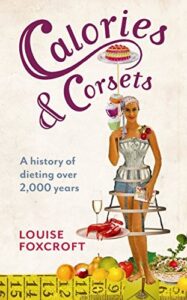
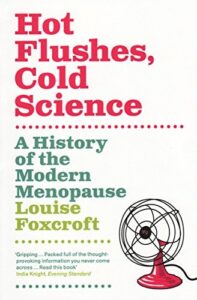
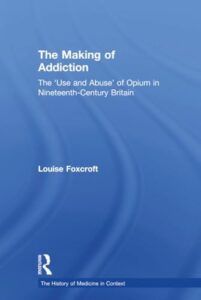
Louise Foxcroft is a British historian of medicine. Her first book, The Making of Addiction, traced how the use of opium in nineteenth-century Britain came to be treated as a disease. Hot Flushes, Cold Science, a history of the modern menopause, won the Longman/History Today Book of the Year award, and Calories and Corsets follows two thousand years of dieting. Her work shows how ideas about the body and its ailments change with culture as much as with science.
01
 Amazon ↗
Local bookstores ↗
The Structure of Scientific Revolutions
by Thomas S. Kuhn · 2012 · Nonfiction
“When I was an undergraduate, it was one of those few books that changed my ideas of very fundamental issues. I discovered that what I thought of as a truth or a fact could completely shift. A fact is a mutable thing, it can change and I had never thought about it like that before. It was a very revolutionary book for me.” — via Interview, May 2012
02
 Amazon ↗
Local bookstores ↗
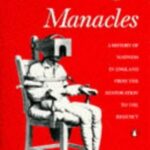
Mind-Forg’d Manacles
by Roy Porter
“I could have chosen any book by Porter, but this one is my favourite. Roy Porter died far too young. He was the most exuberant man, and the generosity and excitement that he had in everyday life enthused all his books. He was meticulous in his research, and he wrote the most fantastically lucid prose.” — via Interview, May 2012
03
 Amazon ↗
Local bookstores ↗
Tormented Hope
by Brian Dillon
“This is a great book. I think Brian Dillon is also very good at relating things to the personal. He looks with enormous insight at the idea of hypochondria – also an ancient notion.” — via Interview, May 2012
04
 Amazon ↗
Local bookstores ↗
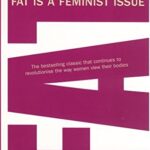
Fat Is a Feminist Issue
by Susie Orbach
“This book isn’t entirely to do with the history of medicine, but it is relevant. I think it is still as important today as when it first came out in 1978. Orbach exposes our obsession with our bodies and the narcissistic nature of society.” — via Interview, May 2012
05
 Amazon ↗
Local bookstores ↗
Emperors of Dreams
by Mike Jay
“Jay’s book is in the same area as my first book The Making of Addiction, and is a really accessible read. He does a calm run-through of luxurious drug use and orthodox drug use.” — via Interview, May 2012