
Reading List
Peg Tyre
Education Journalist and Author
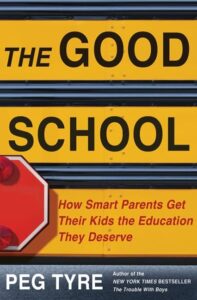
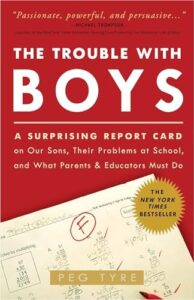
Peg Tyre is an American journalist who writes about education. She spent two decades in journalism, including at Newsweek and The New York Times, was part of a team of reporters that won a Pulitzer Prize, and has taught a course on covering education at the Columbia Graduate School of Journalism. Her first book, The Trouble with Boys, asked why boys were falling behind at school. The Good School turns education research into a practical guide for parents choosing and judging schools.
01
 Amazon ↗
Local bookstores ↗
Proust and the Squid
by Maryanne Wolf
“Parts of it are pretty dense but parts are enormously rewarding. If you read this book, you will never hand your iPhone to your child again when you’re pushing the stroller. You will start talking to them and pointing out colours.” — via Interview, October 2011
02
 Amazon ↗
Local bookstores ↗
The Number Sense
by Stanislas Dehaene
“When schools teach math they tend to ignore that number sense. Dehaene argues that the way math is taught must be better aligned with the way we naturally absorb arithmetic.” — via Interview, October 2011
03
 Amazon ↗
Local bookstores ↗
Cultural Literacy
by E. D. Hirsch Jr.
“Cultural literacy is critical to the health of our democracy. ED Hirsch reminds us that we shouldn’t let schools teach our children to be mere accountants of information. He reminds us it is as important to know Greek mythology as PowerPoint. Content continues to matter, a lot.” — via Interview, October 2011
04
 Amazon ↗
Local bookstores ↗
Mindset
The New Psychology of Success
by Carol S. Dweck · 2007 · Nonfiction
“Before social science popularisers like Malcolm Gladwell got there, there was Carol Dweck – a consummate scientist who gave us real information and important insights into how human character develops. This book can help you learn how to raise motivated and compassionate children and help them become adults with grit, resilience and compassion.” — via Interview, October 2011
05
 Amazon ↗
Local bookstores ↗
The Price of Privilege
by Madeline Levine
“Levine worries that we’re creating a generation of overpressured and overprivileged kids who don’t know how to thrive on their own. Her message to parents is: Manipulating our children to succeed so we can feel good about ourselves is selfish, and runs the risk of creating hollow, unhappy and unloving kids who will hate us when they become adults.” — via Interview, October 2011