

Reading List
Jason Furman
Professor of the Practice of Economic Policy, Harvard Kennedy School
Jason Furman chaired the Council of Economic Advisers under President Obama, having reached it by way of the National Economic Council and the 2008 campaign. He now teaches at the Harvard Kennedy School, co-teaches Harvard’s year-long introductory economics course, and is a nonresident senior fellow at the Peterson Institute. Reading across the discipline is the job, and he writes about it in public, which is what makes his end-of-year lists worth attention.
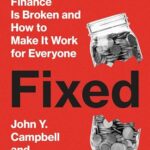
Fixed
Why Personal Finance Is Broken and How to Make It Work for Everyone
by John Y. Campbell & Tarun Ramadorai
“At its core, the book is about the persistent fragility of household finances and why market forces alone don’t fix it. Drawing on evidence from the United States, the United Kingdom, and India, John Campbell (another colleague of mine) and Tarun Ramadorai show that financial illiteracy is widespread and remarkably persistent. This wouldn’t be quite so troubling if financial markets were forgiving, but they aren’t.” — via Interview, December 2025

After the Spike
Population, Progress, and the Case for People
by Dean Spears & Michael Geruso
“For most of modern history, population growth was a background constant; now we may be entering an era of sustained population decline. Spears and Geruso use that fact to motivate a careful examination of why fertility is falling so broadly, why it has proven so hard to reverse, and why this matters for economic growth, fiscal sustainability, and social vitality.” — via Interview, December 2025

The Wealth of Nations
by Adam Smith
“Wealth is not gold accumulation or national power, it is the living standards of the citizens. The source of that wealth is the people as well, through their work. This work is able to produce more through a division of labor (his famous example is the division of labor in a pin factory). And that division of labor itself can be finer—and thus people more productive and living standards higher—if there is more trade.” — via Interview, December 2025

Breakneck
by Dan Wang
“Engineers tend to optimize for building and execution; lawyers optimize for process, rights, and constraint. Wang is careful not to turn this into a morality play. An engineering mindset can deliver breathtaking speed and scale, but it can also be ruthless when individuals or rights get in the way. That tradeoff—capacity versus constraint—is one of the most illuminating ways to compare political systems.” — via Interview, December 2025
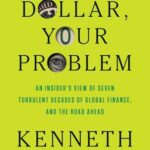
Our Dollar, Your Problem
by Kenneth Rogoff
“The explicit narrative is a warning. Rogoff argues that the era in which the dollar enjoyed unquestioned dominance alongside broad global stability may be fading, and that erosion could bring more frequent or severe crises—sovereign debt problems, inflationary episodes, and financial instability.” — via Interview, December 2025