

Reading List
Christopher Paolini
Novelist
Christopher Paolini began writing Eragon at fifteen, home-schooled in Paradise Valley, Montana, and his parents published it themselves before Knopf picked it up and it sold in the millions. The Inheritance Cycle ran to four volumes and then a return, Murtagh, in 2023. He later moved into science fiction with To Sleep in a Sea of Stars. He reads the genre he grew up inside with unusual generosity.
01
 Amazon ↗
Local bookstores ↗
Amazon ↗
Local bookstores ↗
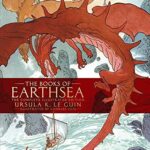
The Books of Earthsea
The Complete Illustrated Edition
by Ursula K. Le Guin · Fantasy
“The setting is unique. It’s a world where the land masses are split up into all these tiny islands and archipelagos, and there are various interesting societies and magics throughout. It strikes hard. I’ve heard from a couple of modern readers that they had difficulty with the narration at first, until they understood what Le Guin was doing. But it is absolutely worth sticking with it, and I love it dearly.” — via Interview, January 2026
02
 Amazon ↗
Local bookstores ↗
Amazon ↗
Local bookstores ↗
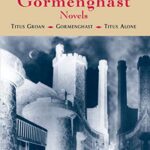
The Gormenghast Novels
Titus Groan, Gormenghast, Titus Alone
by Mervyn Peake · Fantasy
“It’s so Gothic – it’s like marzipan, it’s so rich, so overly described and wonderful. He goes into excessive but delightful detail, and all of the characters are grotesques in the best possible way. It’s like Peake has taken Dickens’ tendencies towards grotesquery, and just pushed that to eleven. I thoroughly enjoyed it because of the setting, the mood. The characters are memorable and the language is delightful.” — via Interview, January 2026
03
 Amazon ↗
Local bookstores ↗
Amazon ↗
Local bookstores ↗
The Lord of the Rings
by J R R Tolkien · Classics
“You can’t talk about epic fantasy without talking about The Lord of the Rings, since a good chunk of modern epic fantasy wouldn’t exist without Tolkien, if not all of it.” — via Interview, January 2026
04
 Amazon ↗
Local bookstores ↗
Amazon ↗
Local bookstores ↗
Dune
by Frank Herbert
“And when people talk about all the incredible world-building of the Dune universe and setting, ‘Oh, there’s this, and there’s that,’ and then you read the book – it’s not in there. It’s in the appendices, or it’s in the sequels. There’s a lesson there, I think, for modern writers, about finding the balance: not overloading the reader with exposition, while at the same time not confusing the reader.” — via Interview, January 2026
05
 Amazon ↗
Local bookstores ↗
Amazon ↗
Local bookstores ↗
The Worm Ouroboros
by E. R. Eddison
“That is how your name will live on. It’s your form of an afterlife, of immortality. Of course, that’s drawn right from Beowulf and a lot of the Nordic and Anglo-Saxon traditions. So it’s incredibly immoral in some ways. There are peasants who are just slaughtered by the thousands on the battlefield, and no one cares. No one cares that things are not moral in the normal, everyday sense: but there’s greatness to it.” — via Interview, January 2026