
Reading List
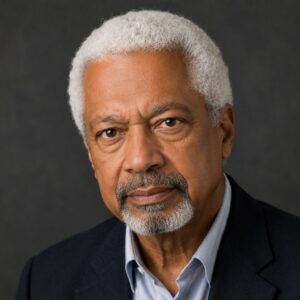
Abdulrazak Gurnah
Novelist and Nobel Laureate in Literature
Abdulrazak Gurnah left Zanzibar as a refugee at eighteen, arriving in England in the late 1960s, and wrote his first novels in a language that was not his first. He spent his career teaching literature at the University of Kent while producing ten novels, among them Paradise, By the Sea, Desertion and Afterlives, works concerned with displacement, colonialism on the East African coast, and the stories migrants tell about where they came from. The Swedish Academy awarded him the Nobel Prize in Literature in 2021.
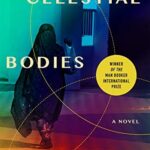
Celestial Bodies
by Jokha Alharthi · 2010 · Fiction
“This is the story of three sisters growing into adulthood as Oman transforms from an austere patriarchal society into a new vibrancy.” — via Article

Waiting for the Barbarians
by J.M. Coetzee · 1980 · Fiction
“The setting is precise in physical details, but its location is not named. However, it is difficult not to see the novel as a parable of apartheid South Africa and the dilemma of the liberal in that context, who is driven by a desire for reprieve but whose gesture made to achieve it is ineffectual. A work of great accomplishment.” — via Article
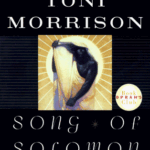
Song of Solomon
by Toni Morrison · 1977 · Fiction
“turbulent journey to his ancestral beginnings in the South is an epic of the African-American experience.” — via Article
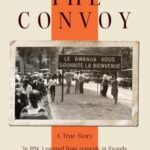
The Convoy
by Beata Umubyeyi Mairesse · 2024 · Memoir
“a moving and powerful account of the violence of the 1994 genocide in Rwanda and the aftermath for the survivors. Its descriptions of the terrors of her days in hiding is unforgettable.” — via Article

The English Patient
by Michael Ondaatje · 1992 · Fiction
“The English Patient is a novel of many achievements. Its location is a ruined monastery turned abandoned military hospital in Italy toward the end of World War II. It has one solitary patient who is seriously burned and too fragile to move.” — via Article

Maps
by Nuruddin Farah · 1986 · Fiction
“Maps is an absorbing account of an orphaned boy growing up among women during the Ogaden War between Somalia and Ethiopia. It is a poetic and superbly organized work.” — via Article