
Reading List
Naomi Klein
Author & Activist
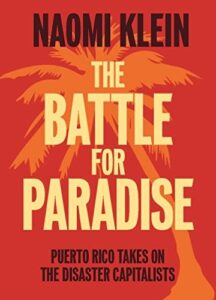
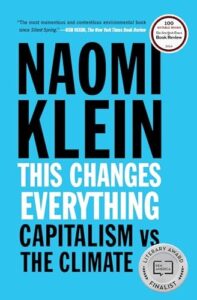
Naomi Klein is a Canadian author, journalist and activist whose books have shaped debates about corporate power, globalization and climate change. No Logo (1999) made her name as a critic of brand culture, The Shock Doctrine (2007) traced how crises are used to push through free-market policy, and This Changes Everything (2014) argued that the climate crisis demands a new economics. She received the Sydney Peace Prize in 2016, and in 2021 she became Professor of Climate Justice at the University of British Columbia.

Frankenstein
by Mary Shelley · 2003 · Fiction
“Victor Frankenstein created a monster when he took his experiments to a devastating extreme.” — via Article, August 2017

Silent Spring
by Rachel Carson
“Carson's book draws its enduring power from the combination of her deep love for the natural world and her indignation at the attacks waged upon it by the chemical industry. A former marine biologist, Carson was battling an aggressive cancer when she wrote this 1962 masterpiece.” — via Article, August 2017

The Dispossessed
An Ambiguous Utopia
by Ursula K. Le Guin · Fiction
“In a sea of dystopian sci-fi, this 1971 novel is a rare example of successful utopian fiction.” — via Article, August 2017

Cloud Atlas
A Novel
by David Mitchell · Fiction
“Another form-defying work. Mitchell leaps across space and time to tell six seemingly disconnected stories in different styles. "Only as you gasp your dying breath shall you understand, your life amounted to no more than one drop in a limitless ocean," one of his characters writes. "Yet what is any ocean, but a multitude of drops?"” — via Article, August 2017

Open Veins of Latin America
Five Centuries of the Pillage of a Continent
by Eduardo Galeano · 1997 · History
“Galeano, who died in 2015, was a Uruguayan journalist and novelist. In his incendiary, poetic, and uncomfortable history of the Americas, published in 1971, he compiled a series of historical vignettes that weave together colonialism's omnipresent themes: genocide, extraction, and exploitation.” — via Article, August 2017

The Fire Next Time
by James Baldwin · Essays
“Published in 1963 amid the throes of the civil rights movement, Baldwin's classic is painfully relevant today. Written largely in the form of a letter from Baldwin to his nephew, the book is a call to channel righteous fury into a powerful resistance.” — via Article, August 2017