
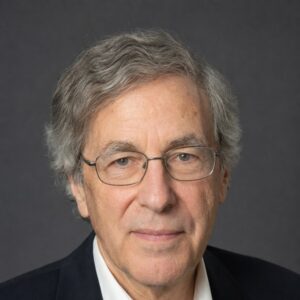
Portrait of Eric Foner
Reading List
Eric Foner
Historian and Professor at Columbia · Columbia University
Eric Foner is an American historian of the Civil War era and Reconstruction, and taught at Columbia for more than forty years.
Reconstruction: America’s Unfinished Revolution (1988) replaced the earlier scholarship that had treated the period as a failure imposed on the South, and remains the standard account. The Fiery Trial (2010), on Lincoln and slavery, won the Pulitzer Prize, the Bancroft Prize and the Lincoln Prize. His other books include Free Soil, Free Labor, Free Men, The Story of American Freedom and The Second Founding.
He has served as president of the American Historical Association and of the Organization of American Historians.

The Feminist Promise
1792 to the Present
by Christine Stansell
“And she helps us understand how liberalism evolved to embrace individual rights and privacy in the most intimate areas of personal life. That came through the women’s movement. Stansell gives a very good account of how these feminist issues, on the one hand, go very deep back in American history, and, on the other hand, reached a critical mass of popular engagement during the 1960s.” — via Interview, September 2012

To Stand and Fight
The Struggle for Civil Rights in Postwar New York City
by Martha Biondi
“Biondi’s book makes the counterintuitive point that the modern civil rights movement began in the north, not in the south. It did not begin with the Montgomery bus boycott; it did not begin with the Supreme Court desegregation decision of 1954. In the aftermath of World War II, the civil rights movement came alive in northern cities. She focuses on New York City.” — via Interview, September 2012

Pivotal Decade
How the United States Traded Factories for Finance in the Seventies
by Judith Stein
“Frustrated with the failures of Keynesian liberalism, Americans were attracted by the conservative approach: Cut taxes, cut regulation and cut back on the liberal state to reinvigorate the American economy. In Stein’s telling, Carter opened the door for the conservative revival epitomised by Ronald Reagan’s election.” — via Interview, September 2012
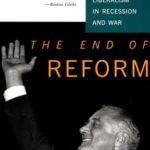
The End of Reform
New Deal Liberalism in Recession and War
by Alan Brinkley
“Brinkley highlights a very important moment in the history of liberalism, a moment that plants the seeds for where we are today. For example, President Obama, whom I admire in many ways, quickly gave up the idea of actually changing the structure of our economy. Obama entered office in the midst of the most serious economic crisis since the Great Depression. He could have said: We gotta rethink things.” — via Interview, September 2012

The Tragedy of American Diplomacy
by William Appleman Williams
“Williams’s book remains important because it shows that foreign interventionism and free trade is deeply embedded in liberal history. Williams critiques American foreign policy as a foreign policy of good intentions. Liberals want to improve the world beyond our borders and broaden the rights of people overseas. The imperial temptation is something that liberals succumb to as much as conservatives.” — via Interview, September 2012