

Portrait of Timothy Garton Ash
Reading List
Timothy Garton Ash
Historian and Professor at Oxford · University of Oxford
Timothy Garton Ash is a British historian of contemporary Europe and Professor of European Studies at Oxford. He calls his method the history of the present: reporting from events as they happen, with a historian’s questions rather than a correspondent’s.
He was in Warsaw, Budapest, Berlin and Prague through 1989, and wrote The Magic Lantern from those weeks. The File (1997) is his account of reading his own Stasi file and meeting the people who had informed on him. Later books include Free Speech (2016) and Homelands: A Personal History of Europe (2023).

The Diaries of Evelyn Waugh
by Michael Davie
“I think Evelyn Waugh is one of the great English novelists of the 20th century and he kept this diary intermittently. A lot of it is about the absolutely amazing quantities that he drank. He started quite early in the day. It’s a document of its time. It’s full of hugely politically incorrect and, by the end, almost self-parodic episodes but it’s also brilliant at catching the moment that life is turned into art.” — via Interview, April 2011
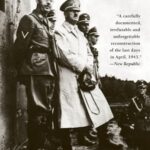
The Last Days of Hitler
by Hugh Trevor-Roper
“He has a series of absolutely brilliant imaginative insights into what it was like to be in the court of Adolf Hitler. For example, the kind of institutional Darwinism between the different organisations and movements. Armies of boring German scholars have spent decades in the archives producing 2,000-page tomes to show that Trevor-Roper was right in this insight he got in a few months.” — via Interview, April 2011

Critical and Historical Essays
by Thomas Babington Macaulay
“This Everyman edition is two volumes of his essays from The Edinburgh Review, which, as you know, was The New York Review of Books of its time, or maybe I should turn that the other way round. It had long critical review essays of the kind people are still writing. Although Macaulay was a teeny bit dismissive of his own work in the genre they are actually models of their kind, full of wonderful insight.” — via Interview, April 2011

The Histories
The Landmark Herodotus
by Herodotus
“I think they could expect to learn a lot about the ancient world, the Greeks and, to a lesser extent, the Persians, but they could also learn a fair amount about how history happens – the interplay of individuals, personalities and larger forces like economics, geography, technology and, of course, chance.” — via Interview, April 2011