

Reading List
Mark Kurlansky
Journalist and Author
Mark Kurlansky is an American journalist and author who writes histories built around a single subject, a fish or a mineral or a year, then follows it outward into economics, politics and food.
Cod: A Biography of the Fish That Changed the World (1997) won the James Beard Award and established the form; Salt: A World History (2002) followed. His other books include 1968: The Year That Rocked the World (2004), The Big Oyster (2006), Paper: Paging Through History (2016), Milk! (2018) and Salmon (2020).
He worked for years as a foreign correspondent in Europe and the Caribbean before turning to books.

The Elegant Universe
Superstrings, Hidden Dimensions, and the Quest for the Ultimate Theory
by Brian Greene
“I love this book. In more years than I want to add up of journalism, I have talked to people in every walk of life imaginable – movie stars and athletes and politicians. I find that the most interesting people to talk to are scientists, but the problem is that they are often not that articulate, and difficult to understand. So when you get a scientist who can explain things clearly it is a real opportunity.” — via Interview, January 2012
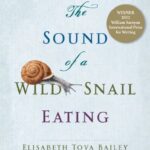
The Sound of a Wild Snail Eating
by Elisabeth Tova Bailey
“Somebody brings her a violet in a pot which has a snail on it, and she becomes fascinated with this snail. And she starts to learn everything about snails, which are not what you would have as the usual household pet. It is an engaging story of snails, which is surprising. This is also an example of a book that you would want to have in your library, because it is such a handsome book and nicely illustrated.” — via Interview, January 2012
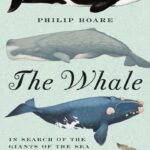
The Whale
In Search of the Giants of the Sea
by Philip Hoare
“We learn a lot about their lives but we also learn about the lore of whales – why they have always been important to us, and what throughout history has been thought about them. The crowning example is Moby Dick, which inspired Hoare to write his book. Moby Dick was in many ways about a mythological version of whales. As Melville intended, it tells us more about us than it does about the whale.” — via Interview, January 2012
On Human Nature
by Edward O. Wilson
“When I was selecting this book it was a bit of a struggle, because I am a big Ed Wilson fan. I have met him and had a fascinating two-hour conversation with him. I have read about 10 books of his, so I had to struggle to choose because there were a number of great candidates.” — via Interview, January 2012
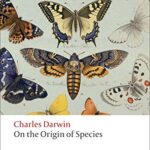
On the Origin of Species
by Charles Darwin · 1859 · Non-Fiction
“It addresses biodiversity long before the word was invented, and climate change, and has some fundamental messages that we need to understand, such as the fact that everything that happens changes everything else. It is a starting point for understanding how everything works. Towards the end of the book Darwin says, “There is a grandeur in this view of life.” And there is. It is so magnificent the way it works.” — via Interview, January 2012