

Reading List
Adam Minter
Journalist and Author
Adam Minter grew up in his family’s scrap metal yard in Minneapolis and has spent his career reporting that industry from the far end of the chain, much of it from Shanghai for Bloomberg. Junkyard Planet follows American waste into Chinese recycling towns and argues the trade is neither the scandal nor the tidy solution it is usually made out to be. Secondhand does the same for used clothes and furniture. He writes about globalisation through the things people throw away.
01
 Amazon ↗
Local bookstores ↗
Cash for Your Trash
by Carl Zimring
“Cash for Your Trash by Carl Zimring is a history of scrap recycling in America, which starts even earlier, in colonial times.” — via Interview, February 2014
02
 Amazon ↗
Local bookstores ↗
Ship Breaker
by Paolo Bacigalupi
“It also brings up resource scarcity. These ships are being extracted of raw materials for unseen corporations with big names who need them.” — via Interview, February 2014
03
 Amazon ↗
The Metal Shredders
by Nancy Zafris
“There are often tensions, and what Nancy Zafris describes could well have been my family.” — via Interview, February 2014
04
 Amazon ↗
Behind the Beautiful Forevers
by Katherine Boo
“Boo also points out how in 2008, with the global financial crash, global demand for raw materials crashed and it had a very deleterious effect on the ability of these trash pickers to make a living.” — via Interview, February 2014
05
 Amazon ↗
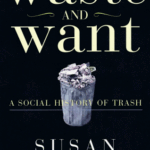
Waste and Want
A Social History of Trash
by Susan Strasser
“Strasser talks about how the American housewife had traditionally been the centre of thrift in a household, but marketers transformed her into a consumer who was using disposable products and generating waste on a scale that no household in human history has seen before.” — via Interview, February 2014