

Reading List
William Dalrymple
Historian and Author
William Dalrymple has written about India and the wider Persianate world for more than three decades, since In Xanadu, the travel book he published at twenty-two. White Mughals and The Last Mughal reconstructed the intimacies and then the violence of the British encounter with Delhi; The Anarchy told the East India Company’s takeover of the subcontinent as a story of corporate power rather than empire; and The Golden Road argued for India’s neglected role in shaping the ancient world.
He works largely from Persian and Urdu sources and archives in Delhi and Lahore, and has won the Wolfson, Duff Cooper and Hemingway prizes among others. He co-founded the Jaipur Literature Festival and co-hosts the history podcast Empire. He has lived on a farm outside Delhi for most of his adult life.
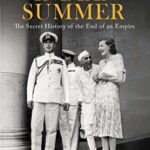
Indian Summer
The Secret History of the End of an Empire
by Alex von Tunzelmann
“Partition is a very complicated story. Many people have tried to tell it before, but this is far and away the best book I’ve read on Partition. I don’t think she had particular access to any brand-new material. She certainly didn’t get her hands on the material she would most have liked, the love letters between Nehru and Lady Mountbatten” — via Interview, November 2009
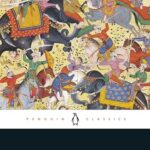
The Mahabharata
by Anonymous & translated and abridged by John D. Smith
“It’s eight times the length of the Bible, one of the great works of literature of mankind. I came to it via the Peter Brook film, and read the script subsequently, and it is every bit as good as it’s made out to be. A very rare thing. It has a sort of Shakespearian ambiguity; you feel as much for the baddies as for the goodies. No one is pure. The bad guys aren’t entirely bad, the good guys aren’t entirely good.” — via Interview, November 2009
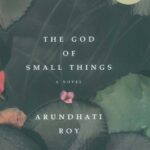
The God of Small Things
by Arundhati Roy
“Of all the great modern Indian novels, of which there has been a flood, Arundhati Roy is the one I enjoyed most. It’s got that fabulous quality, in the literal sense. It has a craftsmanship to it, and one of the greatest endings to any novel. There are so few modern novels which end perfectly, with that perfect click into place, the lock clicking shut. But it has that, and it’s a very well-worked, well-written novel.” — Source

The Argumentative Indian
Writings on Indian History, Culture and Identity
by Amartya Sen
“India is multi-faith, multi-cultural, multi-lingual. And it’s this pluralism and then endless debate going on between these different ways of looking at the world, different value systems: Islam, Hindu, Christian, Buddhist, Sikh, Jain, atheist. It’s a wonderful vision of India, and of how India has this long, argumentative tradition of fighting about everything. So it’s a great title, it’s very true.” — Source
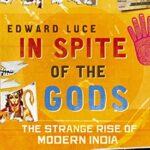
In Spite of the Gods
The Strange Rise of Modern India
by Edward Luce
“Like Partition, this story has been much told, but Edward Luce’s account is authoritative, balanced, sensible and enjoyable. If there is a businessman going to India who wants to get a hang of the economics of the country in an accessible form, this is the book, no question. Luce was the Financial Times correspondent, married to an Indian, and really got under the skin of the place, really travelled.” — Source