
Reading List
Julian Baggini
Philosopher and Writer
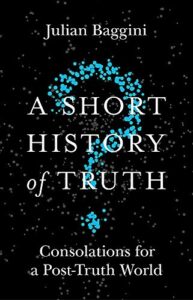
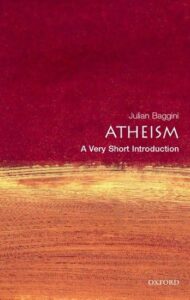
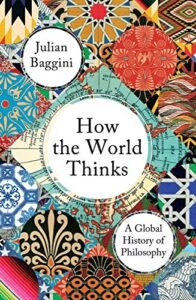
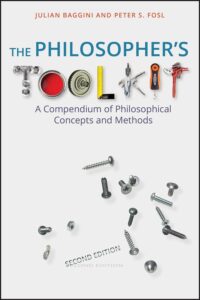
Julian Baggini is an English philosopher and journalist who writes about philosophy for general readers. He co-founded The Philosophers’ Magazine in 1997 and has written more than twenty books. They include Atheism: A Very Short Introduction, The Philosopher’s Toolkit with Peter S. Fosl, A Short History of Truth, How the World Thinks, a global history of philosophy, and How the World Eats, on the ethics and pleasures of food. He is a patron of Humanists UK and has also written on secularism and national identity.
01
 Amazon ↗
Local bookstores ↗
Existentialism and Humanism
by Jean-Paul Sartre
“What you see in Sartre represents that tradition in thought pointing to troubling aspects of accepting a world without God. There are difficulties involved. Primarily, it’s this issue around responsibility. Without God, there’s nothing to fall back on as an authority, nothing to tell us what the right way to live is, or what the correct moral code is, nothing to show us what makes life meaningful. We really do have to make that decision for ourselves. That profound responsibility generates anxiety, anguish and despair, Sartre says.” — via Interview, February 2016
02
 Amazon ↗
Local bookstores ↗
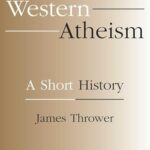
Western Atheism
A Short History
by James Thrower
“Thrower’s book changed my view of the history of atheism in several ways. One was that it made clear to me that overt atheism is a reasonably recent phenomenon: it didn’t really emerge until quite late in the Middle Ages.” — via Interview, February 2016
03
 Amazon ↗
Local bookstores ↗
Breaking the Spell
Religion as a Natural Phenomenon
by Daniel C. Dennett
“Of the so-called ‘four horsemen’ of the New Atheist apocalypse— Daniel Dennett, Richard Dawkins, Sam Harris, and Christopher Hitchens—Dennett is far and away the most sober, rational, and fair-minded of them. If people want to read a New Atheist book, they should read this one. That would be a good way of trying to counter some of those myths that contemporary atheists are all just very cross, angry, and belligerent.” — via Interview, February 2016
04
 Amazon ↗
Local bookstores ↗
Atheists
The Origin of the Species
by Nick Spencer
“I like this one. I don’t agree with its conclusions, but Spencer is quite good at not overstating things. He raises some important questions.” — via Interview, February 2016