

Portrait of John Gray
Reading List
John Gray
Philosopher and Author
John Gray is a British political philosopher who taught at Oxford, Harvard, Yale and the London School of Economics, and whose work is a sustained attack on the idea of progress.
Straw Dogs (2002) argued that humanism is Christianity’s afterlife and that human beings are not exempt from the fate of other animals. Black Mass (2007) traced the Jacobin, Bolshevik and neoconservative projects back to apocalyptic religion. Earlier books include False Dawn on global capitalism, and later ones The Silence of Animals, Seven Types of Atheism and The New Leviathans.
He began as a liberal thinker and moved steadily away from the position, which is itself part of the story his books tell.
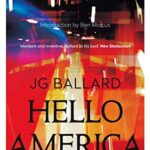
Hello America
by J. G. Ballard · Dystopian
“The ideas it puts forward are presented in the context of an adventure story, of a group of Europeans who explore this almost abandoned continent and come across various groups and tribes who live in the ruins or jungles. JG Ballard himself lived through what might be called an apocalypse – that is, the collapse of life in Shanghai under Japan [in the Second World War] and his subsequent internment in a camp.” — via Interview, March 2012
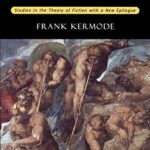
The Sense of an Ending
Studies in the Theory of Fiction
by Frank Kermode · Literary Criticism
“In the book, Kermode talks about myths and fictions – how they differ from one another, and how they play a role not only in literature but also in politics and history. He takes the view of the great 20th century poet Wallace Stevens that we find ourselves having to live on the basis of what we recognise to be fictions, and that fictions create meaning in human life that wasn’t there before.” — via Interview, March 2012
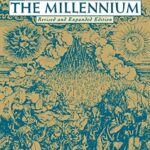
The Pursuit of the Millennium
Revolutionary Millenarians and Mystical Anarchists of the Middle Ages
by Norman Cohn
“It stayed with me and had a profound effect on me, and emerged in my work in a clear way in the book Black Mass. My own copy is inscribed to me by Norman Cohn, which I’m quite proud of. The idea for the book came to him during the Second World War, when he participated in the debriefing of some senior Nazis who displayed aspects of what he recognised even then to be an apocalyptic mentality.” — via Interview, March 2012
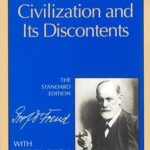
Civilization and Its Discontents
by Sigmund Freud
“Freud thought that civilisation is inestimably valuable – unlike some other writers in central Europe, he was never tempted by barbarism. But he also recognised that civilisation is inherently flawed, not because of political repression and corruption or economic inequality, but because of the nature of the human animal. That is why civilisation can never be rid of its faults, can never be entirely benign.” — via Interview, March 2012
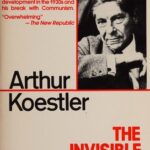
The Invisible Writing
by Arthur Koestler
“He responds to a view by [the critic] Raymond Mortimer that Koestler’s writings assume events to be normal which Mortimer considers abnormal. This drew from Koestler an angry and well justified reply at the end of this volume of memoirs that his life, on which he based his writing and thinking, was completely normal for people in most of Europe at that time. It was normal to fear the loss of one’s life savings.” — via Interview, March 2012