
Reading List
Jason Zweig
Financial Journalist, The Wall Street Journal
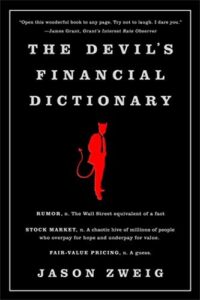
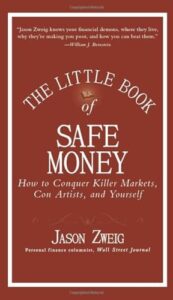
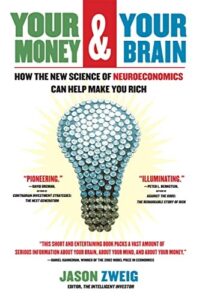
Jason Zweig is an American financial journalist who has written the Intelligent Investor column for The Wall Street Journal since 2008, after earlier spells at Forbes and Money. He edited the revised 2003 edition of Benjamin Graham’s The Intelligent Investor. His own books include Your Money and Your Brain, on the neuroscience of investing, The Little Book of Safe Money and The Devil’s Financial Dictionary, a satirical glossary of Wall Street terms. The column won a Gerald Loeb Award in 2013.
01
 Amazon ↗
Local bookstores ↗
Amazon ↗
Local bookstores ↗
Common Sense on Mutual Funds
by John C. Bogle
“It’s a wonderful, comprehensive introduction to how the financial markets work. It shows who has your interests at heart, and what the various self-interests are, of all the people you are likely to encounter when you invest.” — via Interview, September 2017
02
 Amazon ↗
Local bookstores ↗
Amazon ↗
Local bookstores ↗
Why Smart People Make Big Money Mistakes and How to Correct Them
by Gary Belsky, Thomas Gilovich
“This book does a wonderful job of explaining the basic principles of behavioural finance and the ways that some predictable limitations of the human mind have very clear financial implications.” — via Interview, September 2017
03
 Amazon ↗
Local bookstores ↗
Amazon ↗
Local bookstores ↗
Against the Gods
by Peter L. Bernstein
“It’s probably the best and most interesting high-level book on investing I can think of. It’s a very serious, very elegant, beautifully written book that people should take the time to relish and understand.” — via Interview, September 2017
04
 Amazon ↗
Local bookstores ↗
Amazon ↗
Local bookstores ↗
Where Are the Customers’ Yachts?
by Fred Schwed Jr. · 1940 · Business
“This is such a fun book. The author, Fred Schwed, was, for many years, a broker, but it’s very clear, when you read the book, that his real love was for writing. He wrote beautifully. Even now, some 70 years after it was written, I believe this is still the funniest book ever written about Wall Street.” — via Interview, September 2017
05
 Amazon ↗
Local bookstores ↗
Amazon ↗
Local bookstores ↗
How to Lie with Statistics
by Darrell Huff
“This is another terrific book. It’s light-hearted and a lot of fun to read. It’s a wonderful introduction to critical thinking about statistics, for people who have never taken a class in statistics, don’t like statistics, and may even think that statistics aren’t relevant to their decision-making.” — via Interview, September 2017