
Reading List
Francis Fukuyama
Political Scientist and Author
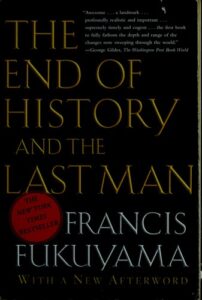
Francis Fukuyama is a political scientist at Stanford, where he directs the Ford Dorsey Master’s in International Policy. The End of History and the Last Man argued in 1992 that liberal democracy had emerged as the final form of human government. It is a thesis more often invoked than read, and one he has spent thirty years qualifying rather than abandoning.
His two-volume The Origins of Political Order and Political Order and Political Decay trace how states, rule of law and accountable government actually get built, from prehistory to the present, and why the sequence matters. Later books include Identity, on the politics of recognition, and Liberalism and Its Discontents. He has written on state-building, trust and biotechnology, and taught at Johns Hopkins and George Mason before Stanford.
The Financial Crisis Inquiry Report
Final Report of the National Commission on the Causes of the Financial and Economic Crisis in the United States
by Financial Crisis Inquiry Commission
“It’s mostly the dissent, which basically shows this amazing phenomenon, that the Republicans have not been able to learn from the past 30 years. Especially the Wallison dissent, which takes what is a very complex crisis that has multiple roots and lays it all at the door of Fannie and Freddie and government intervention. It seems to me transparently designed to exonerate free markets.” — via Interview, January 2017

Fault Lines
How Hidden Fractures Still Threaten the World Economy
by Raghuram G. Rajan
“The other thing that I found interesting about that book is that Rajan is a former chief economist of the International Monetary Fund. He is quite aware – and gives quite a lot of evidence in the book – that ultimately one of the big causes of this crisis was Asia, and all the surplus countries that have been following this export-driven growth model. He says that that growth model is destabilising and is not sustainable for the countries that engage in it.” — via Interview, January 2017

13 Bankers
The Wall Street Takeover and the Next Financial Meltdown
by Simon Johnson and James Kwak
“He accepts the fact that the crisis had multiple causes but he argues that redistribution done through subsidised lending is one of the most inefficient and dangerous ways to do redistribution. He wouldn’t actually disagree with the notion that the country needs more redistribution, but he would call for different social policy remedies.” — Source

The Big Short
Inside the Doomsday Machine
by Michael Lewis · Business
“A lot of people on Wall Street itself say that the norms were quite different 30 years ago. When everyone was part of a partnership, there was more of a normative sense that you had a responsibility to customers and that your long-term reputation mattered a great deal. This shorter-term trading mentality has really displaced that in many firms.” — Source

This Time Is Different
Eight Centuries of Financial Folly
by Carmen Reinhart and Kenneth Rogoff
“In a way they were victims of complacency. The other thing that is disturbing about the book is that it really shows how long it takes for a country to recover from this kind of a crisis. This suggests that the US and Europe, which is involved in a separate financial crisis of its own, are in for a prolonged period of low growth and stagnation.” — Source