

Portrait of Dava Sobel, science writer
Reading List
Dava Sobel
Science Writer
Dava Sobel is an American science writer who spent years as a science reporter for The New York Times before turning to books, and who has made a speciality of the history of astronomy and the people who made it.
Longitude (1995), her account of the clockmaker John Harrison and the problem of fixing a ship’s position at sea, became an unexpected international bestseller and won the British Book of the Year award. Galileo’s Daughter (1999) built a portrait of Galileo around the surviving letters of his eldest daughter, a nun at San Matteo, which Sobel translated herself. The Planets (2005) took a different form again, a set of essays on each body in the solar system. A More Perfect Heaven (2011) reconstructed how Copernicus was finally persuaded to publish, and includes a play Sobel wrote about the encounter.
Later books include The Glass Universe, on the women who catalogued the stars at the Harvard College Observatory, and The Elements of Marie Curie. She has also written for Discover, Science Digest and The New Yorker.
The Sleepwalkers
A History of Man's Changing Vision of the Universe
by Arthur Koestler
“Unfortunately, as you say, he didn't like Copernicus, or Galileo for that matter. The only one he seems to really have liked was Kepler. So one reads his book sceptically. But it is a book that was widely read and it had a tremendous influence on people. Even though it came out in the 1950s you still meet people who will talk about that book. And for many it was the book that got them interested in astronomy.” — via Interview, April 2012
Galileo at Work
His Scientific Biography
by Stillman Drake
“Yes, this book really examines Galileo's day-to-day life. It looks at what kind of correspondence he maintained with scientists all over Europe. It also shows what his thinking was on various problems. It is a close-up look at how he performed his experiments and how he worked with others to shape his ideas.” — via Interview, April 2012
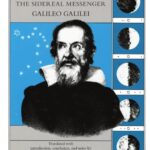
Sidereus Nuncius
or The Sidereal Messenger
by Galileo Galilei
“Until Galileo's time, the most that anyone could know about a planet was where it was. With his telescope Galileo was able to determine the composition of the moon. He was also able to solve various longstanding mysteries, such as what is the Milky Way – by looking through the telescope he could see that it was made up of myriad stars. Perhaps his most exciting discovery was finding the moons of Jupiter.” — via Interview, April 2012
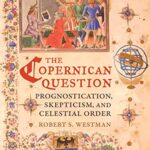
The Copernican Question
Prognostication, Skepticism, and Celestial Order
by Robert S. Westman
“Robert Westman was interested in exploring the idea that Copernicus was also an astrologer as well as an astronomer. For many years people thought that Copernicus paid no attention to astrology. But in his day, if you were an astronomer you were also an astrologer. Why else would you care about the positions of the planets? But he never wrote about astrology.” — via Interview, April 2012

The Book Nobody Read
Chasing the Revolutions of Nicolaus Copernicus
by Owen Gingerich
“What is interesting about Gingerich's book is that he writes about his own study of On the Revolution. Over a period of 30 years, wherever he travelled he sought out all the extant copies of it, examining more than 600 surviving copies from the 16th century, and while he was doing that he noticed that the book hadn't only been read but properly studied. He knew this because the margins of the copies were full of notes. So he was able to prove that it was, in fact, an extremely important book.” — via Interview, April 2012