

Portrait of Carl Zimmer
Reading List
Carl Zimmer
Science Writer
Carl Zimmer is an American science writer who has covered biology for the New York Times for two decades, and teaches science writing at Yale.
Parasite Rex (2000) made the case that parasites are central to evolution rather than marginal to it. Soul Made Flesh told how the brain came to be understood as the seat of the mind, She Has Her Mother’s Laugh (2018) examined heredity in all its forms, and Life’s Edge (2021) asked what separates the living from the non-living, a question he shows science cannot cleanly answer.
He is among the few journalists with a species named after him, a bacterium found in the human gut.

The Extended Phenotype
The Long Reach of the Gene
by Richard Dawkins
“In this book Dawkins took this argument to the next level. He said that when we think of the phenotype, we think about fur or eyesight or the red blood cell’s ability to take in oxygen. But genes influence behaviour, and so behaviour is part of the phenotype. And that behaviour allows animals to change their environment in ways that can then raise their reproductive success.” — via Interview, September 2012
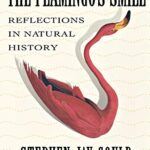
The Flamingo’s Smile
Reflections in Natural History
by Stephen Jay Gould
“Someone like Richard Dawkins would look at this as potentially being an adaptation, and would ask, ‘How does this behaviour raise the reproductive success of the male, so that natural selection favours that expression and it spreads?’ Gould likes to push people to think about other possibilities. Maybe some things are a fluke of history. Maybe something that looks like an adaptation is nothing of the sort.” — via Interview, September 2012

The Machinery of Life
by David S. Goodsell
“If they want to show how genes are used to make proteins, they show a very tiny, isolated piece of DNA, and then an isolated strand of RNA, and an isolated ribosome that uses the RNA to make a protein – as if that was all there was in the cell. But the fact is that every cell is actually crammed with molecules, all of which have really important things to do.” — via Interview, September 2012

The Immortal Life of Henrietta Lacks
by Rebecca Skloot
“And they are real people; they are not just cardboard cutouts. Henrietta Lacks’s family faced the strangeness of life in a very intimate way. Their mother dies of cancer, and yet years later they hear from scientists that she is actually still alive, and she is in a lab somewhere. And they try to make sense of it all, which is tough, because they are not scientists. Her husband only got a grade-school education.” — via Interview, September 2012

Mutants
On Genetic Variety and the Human Body
by Armand Marie Leroi
“Armand Leroi is a biologist at Imperial College, London. And this is a really wonderful book because Leroi takes what could have just been a freak show and turns it into a really amazing experience. He writes about these people as people. He finds wonderful portraits of individuals – for example, some of them are covered in hair and look like wolves – and he tells the story of their lives in quite beautiful prose.” — via Interview, September 2012