

Reading List
Audrey Kurth Cronin
Director, Carnegie Mellon Institute for Strategy and Technology
Audrey Kurth Cronin is an American scholar of international security and emerging technology. She directs the Carnegie Mellon Institute for Strategy and Technology and is Trustees Professor of Security and Technology at Carnegie Mellon University. She studied at Princeton and took her doctorate at Oxford, where her teachers included Adam Roberts and Michael Howard.
How Terrorism Ends (2009) studies how terrorist campaigns decline and collapse. Power to the People (2020) argues that open, commercially available technology is putting lethal capability in the hands of individuals and non-state groups. She previously taught at the US National War College and at American University.

Deciphering Sun Tzu: How to Read The Art of War
by Derek M. C. Yuen
“My last book is Derek M. C. Yuen’s Deciphering Sun Tzu: How to Read The Art of War. This may seem a departure from my books on terrorism; however, I believe it is a complement to them. Understanding the Daoist philosophy at the heart of Sun Zi’s writings provides a great lens through which to understand the logic of terrorism.” — via Interview, January 2015

The ISIS Apocalypse: The History, Strategy, and Doomsday Vision of the Islamic State
by William McCants
“After the dramatic sweep across Iraq last summer, authors churned out a lot of books of variable quality, analyzing ISIS. This is the best book on ISIS I’ve read. It explains the group’s ideas, history, and structure in an in-depth scholarly way that is nonetheless accessible to the novice reader.” — via Interview, January 2015
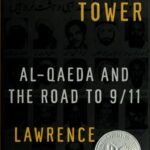
The Looming Tower
by Lawrence Wright
“Wright’s book is written in an engaging style, engrossing and entertaining but well-researched, based solidly on facts, and never sensationalistic. There is also a very nice appendix with a summary of the main characters, a big help for those who find it difficult to remember Arabic names. My students consistently love it. There is a reason why The Looming Tower won the Pulitzer Prize. It is a very fine book.” — via Interview, January 2015

A Savage War of Peace
by Alistair Horne
“Horne crafts it into a rare combination of an excellent detailed historical book about a war that also brings along a thought-provoking and timeless strategic perspective. Although originally written in the early 1970s, its themes are directly relevant to today’s challenges, including the ethics of torture, the power of popular ideas, and the fraught relationship between military victory and political outcome.” — via Interview, January 2015

Every War Must End
by Fred Charles Iklé
“Iklé uses numerous historical examples to explain common problems. Policy-makers often succumb to wishful thinking, biased estimates, ideological dogma, and bureaucratic in-fighting, failing to think strategically in the midst of a fight. Our very human capacity to judge costs and benefits is distorted by the passions and sacrifices of an ongoing war.” — via Interview, January 2015