
Reading List
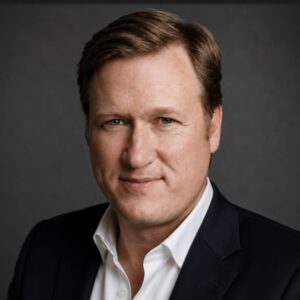
Bryan Burrough
Journalist and Author
Bryan Burrough reported for The Wall Street Journal before co-writing Barbarians at the Gate with John Helyar, the account of the RJR Nabisco buyout that became the standard text on 1980s Wall Street. He spent years as a special correspondent at Vanity Fair and has since written Public Enemies on the 1930s crime wave, Days of Rage on American radical violence, and The Gunfighters, a history of the Texas roots of frontier gun culture. He reads deeply in Western history and is exacting about which of it holds up.
Ride the Devil’s Herd
Wyatt Earp's Epic Battle Against the West's Biggest Outlaw Gang
by John Boessenecker · 2020 · History
“Boessenecker is by far the most talented author writing about gunfighters today. His encyclopedic knowledge is evident here on almost every page.” — via Article
Jesse James
Last Rebel of the Civil War
by T.J. Stiles · 2003 · Biography
“In fact, it may be the single best biography of an American criminal I've read. It brings an enveloping academic rigor and a propulsive drive to a field of study that too often lacks both.” — via Article
Wyatt Earp
The Life Behind the Legend
by Casey Tefertiller · 1997 · Biography
“History has been kind to Earp, a onetime pimp and escaped federal prisoner who, in the Hollywood films of the past 75 years, has found the widespread adulation that eluded him in life.” — via Article
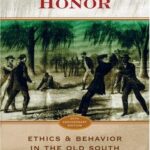
Southern Honor
Ethics and Behavior in the Old South
by Bertram Wyatt-Brown · 1982 · History
“the final word on why honor mattered so much in the antebellum South that men stood ready to kill one another in defense of it.” — via Article
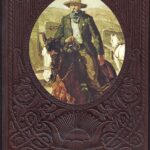
The Gunfighters
by Paul Trachtman · 1977 · History
“Lavishly illustrated and leather-bound, this entry in the Time-Life Old West series is a classic that found its way onto the bookshelves of many teenage boys like me during the 1970s.” — via Article
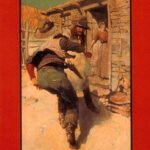
I’ll Die Before I’ll Run
The Story of the Great Feuds of Texas
by C.L. Sonnichsen · 1951 · History
“Sonnichsen was a Harvard-trained historian teaching in El Paso who almost single-handedly recovered the stories of the great feuds that wracked Texas for a decade after the Civil War.” — via Article