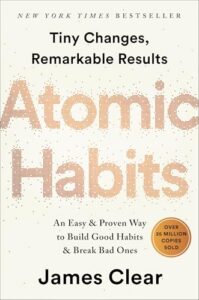

Reading List
James Clear
Author and Speaker
James Clear is an American writer best known for Atomic Habits, his 2018 book on how small changes compound into large results, which has sold more than 25 million copies. He built the audience for it through a long-running newsletter on habits and decision-making, and reads widely enough to publish his own recommended-reading list, complete with three-sentence summaries of the nonfiction he finishes. His taste runs to durable ideas: Stoic philosophy, behavioural psychology, and first-hand accounts of people tested to their limits.

Guns, Germs, and Steel
by Jared Diamond · 1997 · History
“Some environments provide more starting materials and more favorable conditions for utilizing inventions and building societies than other environments. This is particularly notable in the rise of European peoples, which occurred because of environmental differences and not because of biological differences in the people themselves. There are four primary reasons Europeans rose to power and conquered the natives of North and South America, and not the other way around: 1) the continental differences in the plants and animals available for domestication, which led to more food and larger populations in Europe and Asia, 2) the rate of diffusion of agriculture, technology and innovation due to the geographic orientation of Europe and Asia (east-west) compared to the Americas (north-south), 3) the ease of intercontinental diffusion between Europe, Asia, and Africa, and 4) the differences in continental size, which led to differences in total population size and technology diffusion.” — Source
Sapiens
A Brief History of Humankind
by Yuval Noah Harari · 2015 · Nonfiction
“Human history has been shaped by three major revolutions: the Cognitive Revolution (70,000 years ago), the Agricultural Revolution (10,000 years ago), and the Scientific Revolution (500 years ago). These revolutions have empowered humans to do something no other form of life has done, which is to create and connect around ideas that do not physically exist (think religion, capitalism, and politics). These shared “myths” have enabled humans to take over the globe and have put humankind on the verge of overcoming the forces of natural selection.” — Source

This Is Water
Some Thoughts, Delivered on a Significant Occasion, About Living a Compassionate Life
by David Foster Wallace · 2009 · Nonfiction
“Learning “how to think” really means learning how to exercise some control over how and what you think. It can be easy to spend our entire lives accepting our natural default ways of thinking rather than choosing to look differently at life. The only thing that is capital-T True is that you get to decide how you’re going to try to see life and how you construct meaning from experience.” — Source
When Breath Becomes Air
by Paul Kalanithi · 2016 · Nonfiction
“The memoir of Paul Kalanithi, a neurosurgeon at Stanford University, who is diagnosed with terminal lung cancer in his mid-thirties. Kalanithi uses the pages in this book to not only tell his story, but also share his ideas on how to approach death with grace and what it means to be fully alive.” — Source
The War of Art
Winning the Inner Creative Battle
by Steven Pressfield · 2002 · Self-Help
Recommended via Reading List
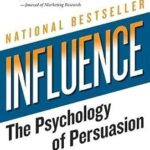
Influence: The Psychology of Persuasion
by Robert B. Cialdini · 1984 · Self-Help
Recommended via Reading List

A Brief History of Time
From the Big Bang to Black Holes
by Stephen Hawking · 1988 · Nonfiction
Recommended via Reading List

Surely You’re Joking, Mr. Feynman!
Adventures of a Curious Character
by Richard P. Feynman · 1985 · Nonfiction
Recommended via Reading List

Into Thin Air
A Personal Account of the Mt. Everest Disaster
by Jon Krakauer · 1997 · Nonfiction
Recommended via Reading List