

Portrait of Guy Raz
Reading List
Guy Raz
Broadcaster and Journalist
Guy Raz is an American broadcaster who reported for NPR and CNN from Berlin, London and Baghdad before becoming one of public radio’s most recognisable hosts.
He was NPR’s Pentagon correspondent and hosted All Things Considered on weekends, then created and presented How I Built This, in which founders describe how their companies were made. He also co-created TED Radio Hour and Wow in the World, a science programme for children.
His book How I Built This (2020) draws the common patterns out of several hundred of those interviews.
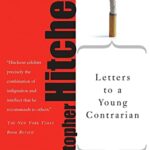
Letters to a Young Contrarian
by Christopher Hitchens
“I don’t think there is a better journalist than Hitchens writing in English. The power of his arguments – they’re so crisply written, they’re so forceful that, if you are on the other side, they almost strangle you. There’s nobody more compelling to read. Every time I read him, I learn something from him. His arguments are so tight, they’re hermetic. It’s very difficult to take them apart.” — via Interview, March 2011

The Assassins’ Gate
America in Iraq
by George Packer
“I spent a lot of time in Iraq as a reporter, and I would inhale Packer’s reporting in The New Yorker. Every time something new came out, it was the first thing I would read. He’s not one of these bang-bang war reporters, rushing to the scene of battles, just to then sit down at night with a bottle of Scotch and other stubble-faced journalists, regaling each other with stories of their close calls. It’s not his style.” — via Interview, March 2011
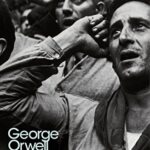
Homage to Catalonia
by George Orwell · 1938 · Memoir
“He wasn’t one of these reporters who would interview the killer and the victim with equal weight. He believed there were times when one side was wrong. Like the Holocaust. You wouldn’t interview a member of the Einsatzgruppen and then one of the victims and get two sides of that story. There aren’t a whole lot of cases in history where it’s so clear-cut, but Orwell saw the Spanish Civil War as one of those cases.” — via Interview, March 2011
Writing News for Broadcast
by Edward Bliss Jr. and James L. Hoyt
“And then something that print journalists wouldn’t think about is the rhythm of what you say. The way a long sentence sounds next to a short sentence, the cadence. When I write a script I really think about that rule. It essentially says to you, once you’ve written down what you want to say, read it out loud and don’t even pay attention to the meaning of the words. Just listen for the rhythm of the way they sound.” — via Interview, March 2011
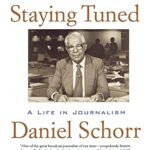
Staying Tuned
A Life in Journalism
by Daniel Schorr
“What I didn’t know were the personal details. A lot of people thought of him as the consummate insider, always with a seat in the inner circle, always going to the White House and meeting with the presidents and getting background briefings. He wasn’t at all. He was the opposite of that. He was an outsider in almost every way. Even at CBS. Many of the guys he worked with at CBS were Ivy League patricians.” — via Interview, March 2011