

Reading List
Marcus du Sautoy
Mathematician and Professor at Oxford · University of Oxford
Marcus du Sautoy is a mathematician at Oxford, where he succeeded Richard Dawkins as Simonyi Professor for the Public Understanding of Science. His research is in group theory and number theory.
The Music of the Primes (2003) told the story of the Riemann hypothesis; Finding Moonshine followed symmetry, and The Creativity Code (2019) asked what artificial intelligence can and cannot make. He has presented mathematics on television and radio for two decades.
He also works with artists and theatre-makers, including the company Complicite, on projects that put mathematics on stage.

Logicomix
An Epic Search for Truth
by Apostolos Doxiadis and Christos H. Papadimitriou
“Ideas of infinity are in there. But it’s just a beautifully told story and also they talk about their writing of the book, so it’s very self-referential, which is the whole key to Gödel’s proof. And there’s a lovely use of the graphic novel form, of people’s thought bubbles inside thought bubbles inside thought bubbles. It’s incredibly playful and I think it’s a fantastic addition to the mathematical literature.” — via Interview, September 2014

The Glass Bead Game
by Hermann Hesse
“Now, Hermann Hesse’s The Glass Bead Game is a novel but there’s a lot of – not exactly maths – but a lot of pattern in there.” — via Interview, September 2014
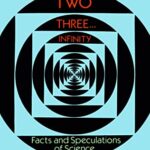
One Two Three . . . Infinity
Facts and Speculations of Science
by George Gamow
“Yes, one of the things that really excited me when I read this – again when I was at school – was this idea of infinity. Gamow was a physicist first of all: Mathematics is the language of physics and you can see that through this book. It was where I read for the first time the idea that there could be different sorts of infinity and that was just mind-blowing.” — via Interview, September 2014
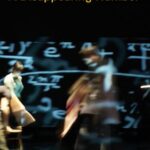
A Disappearing Number
by Complicite
“The captivating thing about this story is it’s really a mathematical love affair between GH Hardy – Cambridge mathematician, English – and this Indian mathematician, Ramanujan, who had no formal training but somehow had this extraordinary way of thinking about mathematics. And they saw it in such different ways and they came from such different cultures, yet mathematics was this common language which brought them together.” — via Interview, September 2014

A Mathematician’s Apology
by G. H. Hardy
“Yes, it really appealed to me when I read it as a kid because I was interested in music, I played the trumpet, I loved doing theatre, and somehow GH Hardy in that book revealed to me how much mathematics is a creative art as much as a useful science. In fact he probably goes further, he really revels in the beauty of the subject and says he’s not particularly interested in the applications.” — via Interview, September 2014