

Portrait of Orson Scott Card
Reading List
Orson Scott Card
Novelist
Orson Scott Card is an American novelist best known for Ender’s Game (1985) and its sequel Speaker for the Dead (1986), which won the Hugo and Nebula awards in consecutive years, the first time any author had done so.
The Ender sequence now runs to more than a dozen books. He also wrote the Tales of Alvin Maker series, an alternate-history frontier fantasy, and the Homecoming saga, alongside novels including Pastwatch: The Redemption of Christopher Columbus and Enchantment.
He has written widely on craft, in Characters and Viewpoint and How to Write Science Fiction and Fantasy.
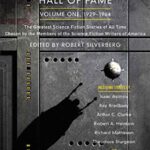
The Science Fiction Hall of Fame
Volume One, 1929-1964
by Robert Silverberg · Science Fiction
“As a result, science fiction tales tend to be markedly longer to tell the same number of events. So in singling out shorter works for The Science Fiction Hall of Fame, SFWA would have to ignore novellas – a length that thrives in sci-fi precisely because it allows room for world development. That’s why there’s a second volume of the Hall of Fame, divided into parts 2a and 2b in some editions.” — via Interview, October 2011
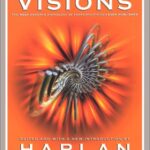
Dangerous Visions
33 Original Stories
by Harlan Ellison · Science Fiction
“Like Bradbury, his work is mostly short stories, and from masterpieces like “‘Repent, Harlequin!’ Said the Ticktockman” and “I Have No Mouth But I Must Scream” Ellison became the heart of the new wave. But it is in his role as the creator of anthologies that I recommend him here. He came up with the idea of a collection of stories that could not be published in the somewhat rule-bound magazines of the day.” — via Interview, October 2011
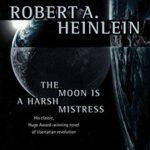
The Moon Is a Harsh Mistress
by Robert A. Heinlein · Fiction
“This account of a revolutionary struggle between lunar colonists – many of whom came there (or their parents did) as exiles and prisoners – and the exploitative government agency that controls their lives is, like Foundation, a working out of historical forces. But Heinlein sticks with a cast of a few main characters and, with a charmingly colloquial writing style, makes us care about them all.” — via Interview, October 2011

The Martian Chronicles
by Ray Bradbury · Fiction
“When he went to space in The Martian Chronicles, it was already well-known that Mars was nearly or completely lifeless. It didn’t matter. He was writing about the Mars of the dreams of children growing up in the 1930s, the Mars that Edgar Rice Burroughs had written about. Bradbury’s martian stories are infused with tragedy, lost dreams, ancient glories and hope resurgent.” — via Interview, October 2011

Foundation
by Isaac Asimov · 1951 · Science Fiction
“Foundation and its sequels show you the scope of first-rate extrapolative science fiction, and there is no better writer of the American plain style than Isaac Asimov. He never calls attention to himself as writer, but invisible as he is, he writes with such lucidity that everything is always clear and you slip through the story effortlessly.” — via Interview, October 2011