
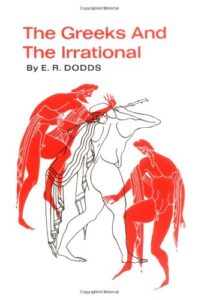
The Greeks and the Irrational
The classic study of the irrational in Greek religion and thought, and of the daemon as a creative force.
Dodds set out to explain why the Greeks, so often held up as the founders of reason, wrote so much about dreams, possession, madness and the daemon. Delivered as the Sather Lectures in 1949, the book uses anthropology and psychology to read Homer, the tragedians and Plato, and argues that the rational tradition grew out of the irrational rather than replacing it. It changed how classicists work.
Recommended by 2 People

Mary Beard
Dodds was at an exhibition of the Elgin Marbles at the British Museum and he got talking to a schoolboy. The boy told him: ‘I know it’s a terrible thing to say, but I don’t really like this stuff – it’s all so rational.’ Well, that got Dodds thinking about this common idea that the ancient Greeks were all very cerebral, gliding about in white gowns. But was Greek culture so fantastically rational?
Interview · October 2009

Harold Bloom
The Greeks and the Irrational is an exploration of the daemon, which is Christianised and reduced to demons or devils. But the daemon was a concept, as Dodds makes beautifully clear, having to do with the creative forces in the individual, which are deeper and more pervasive than what you might want to call the mere conscious. Though it’s not the unconscious in the Freudian sense, the daemon is the creative spirit.
Interview · August 2011
As an Amazon Associate, bookstoread.org earns from qualifying purchases. Links to Amazon on this page may earn us a commission at no extra cost to you. Spotted an error on this page? Tell us and we will fix it.