Reading List
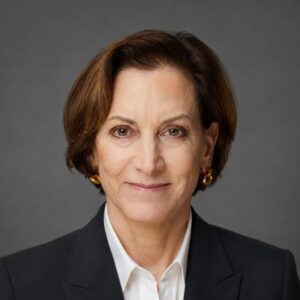
Anne Applebaum
Journalist and Historian
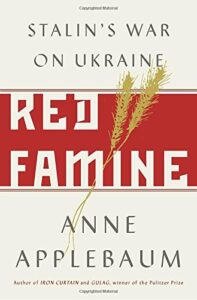
Anne Applebaum won the Pulitzer Prize for Gulag: A History, the first full account in English of the Soviet camp system, drawn from archives that had only recently opened. Iron Curtain followed the imposition of communism on Central Europe between 1944 and 1956, and Red Famine made the case that the Ukrainian famine of 1932-33 was a deliberate act of policy.
Her later books turn to the present: Twilight of Democracy on why parts of the intellectual class across Europe and America chose authoritarianism, and Autocracy, Inc. on the working relationships between modern dictatorships. She is a staff writer at The Atlantic and a senior fellow at Johns Hopkins, and has lived in Poland for much of her adult life.
Memoir of Hungary
by Sándor Márai
“Sándor Márai is one of the great Hungarian novelists. He was in Hungary during the war, and left in 1948. This book is about a neutral intellectual’s encounter with communism, and it records what he saw as it happened. Whereas Miłosz writes from the present looking back, trying to explain the past, Márai writes as if in the moment itself.” — via Interview, March 2012
Speak, Memory
An Autobiography Revisited
by Vladimir Nabokov
“But this is one of the central themes: the tricks that memory plays, and how, in the course of writing, things come back to you. While this is a book about a childhood in Russia, it’s also a book about how time changes what we think about things. You should certainly read it with a grain of salt.” — Source

The Snows of Yesteryear
Portraits for an Autobiography
by Gregor von Rezzori
“Von Rezzori’s central theme is the constant change of borders and nationality, and their impact on his childhood. He was born an “Austrian,” then became a Romanian, though the Romanians didn’t consider him a “real” Romanian. In that part of the world, the experience of such shifts was once quite common.” — Source

A World Apart
Imprisonment in a Soviet Labour Camp During World War II
by Gustaw Herling
“Like Levi, he is interested in how different people reacted to the conditions of the camps. How did people fit into this new moral order? Did their good qualities survive? Did they become evil like the system? Did they keep their humanity or not? He doesn’t answer yes or no, but shows how people wrestled with these dilemmas. This is a memoir, but it’s also a book about human morality in an extreme situation.” — Source

The Captive Mind
by Czeslaw Milosz
“The Captive Mind isn’t a straight memoir. Although Milosz is writing about his own life and his past, he is also grappling with a larger subject: How his generation of liberal intellectuals came to collaborate with, and work alongside, the Communist party. And he is trying to understand his own behaviour: Why did I act that way?” — Source